Enagic Independent Distributor · Córdoba

Five watersfrom one tap

Kangen means “return to origin”. An Enagic machine filters your tap water and separates it by electrolysis into five types, each with its own pH and its own use.

What Kangen Water is

Tap water, filtered and electrolysed

The machine connects to your kitchen tap. It first filters the mains water and then passes it through a chamber of platinum-coated titanium plates, where electrolysis separates it into an alkaline and an acidic stream.

By choosing the level on the panel you get your drinking water, your cooking water and your cleaning water from the same machine. Enagic has been manufacturing these ionisers in Japan for over five decades.

See the five levels
ElectrolysisAs it passes through the plates, the water separates into an alkaline stream, which comes out of the main hose, and an acidic one, which comes out of the secondary hose.
The pH scaleIt runs from 0 to 14. Seven is neutral: above that is alkaline, below is acidic. The machine produces water between pH 2.5 and pH 11.5.
What ORP isOxidation-reduction potential measures, in millivolts, the water's tendency to oxidise or to reduce. A high positive ORP is what you want for cleaning and disinfecting; ioniser water has a negative ORP.
It keeps the mineralsUnlike reverse osmosis, electrolysis does not strip out the calcium, sodium, potassium and magnesium present in mains water.
5types of water
1974founded in Japan
ISO9001 · 14001 · 13485
Water at home,
no bottles to carry
From pH 2.7 to pH 11

The five waters

Three are for drinking and cooking; two are for household use and are not drunk. Move the control to see them one by one.

8.5–9.5approximate pH

Kangen Water

For drinking and cooking · three levels

The everyday water for drinking and cooking. Electrolytically reduced, hydrogen-rich alkaline water, produced at three levels within that range.

  • DrinkingWithout the smell of tap water, lighter tasting and slightly sweet.
  • Food preparationWash vegetables and fish. Pre-boiling broccoli or onion brings out their flavour.
  • Coffee and teaImproves colour and aroma, and less coffee or tea gives the same body.
  • CookingDraws out the flavour of ingredients, which turn out tender, and lets you use less salt.
  • PlantsEncourages germination and seedling development.
Every day

A home with less plastic and fewer products

Strong Kangen Water is used to clean food and kitchen utensils and to tackle stubborn stains. Strong Acidic Water is used for surface hygiene. Between them they cover much of the cleaning around the house.

And your drinking water comes straight from the tap, so the bottles in the car boot and the packs in the pantry simply disappear.

Cooking, cleaning
and daily care
Where your drinking water comes from

The options you have at home

Every water source has its advantages and its drawbacks. Here are the facts, so you can compare for yourself.

SourceForAgainst
Tap waterStrictly regulated and of good quality across Europe. The most practical source and the cheapest.Usually treated with chlorine. May carry sediment and taste flat. Mineral content varies by area.
Bottled waterConvenient and available anywhere.The most expensive option. The plastic may contain BPA and phthalates. Consumption is estimated at some 200 billion bottles a year, and most end up as waste rather than being recycled.
Reverse osmosis and distilledRemoves practically everything the water carries.It also removes the minerals, and that is the debate: minerals in water count nutritionally.
Well waterSometimes naturally more alkaline.Prone to contamination. Requires periodic testing and maintenance is expensive.
Enagic ioniserFilters chlorine and sediment from mains water while keeping the minerals. Five water types from one tap, and no bottles.A high upfront investment. The filter cartridge has to be changed every six months.

Sources: European Commission, DG Environment, 'Science for Environment Policy' (edited by SCU, University of the West of England, Bristol); Mayo Clinic on BPA; NIH on phthalates in plastics.

Catalogue

The machines

Which one fits depends on how many of you there are at home and what you will use it for.
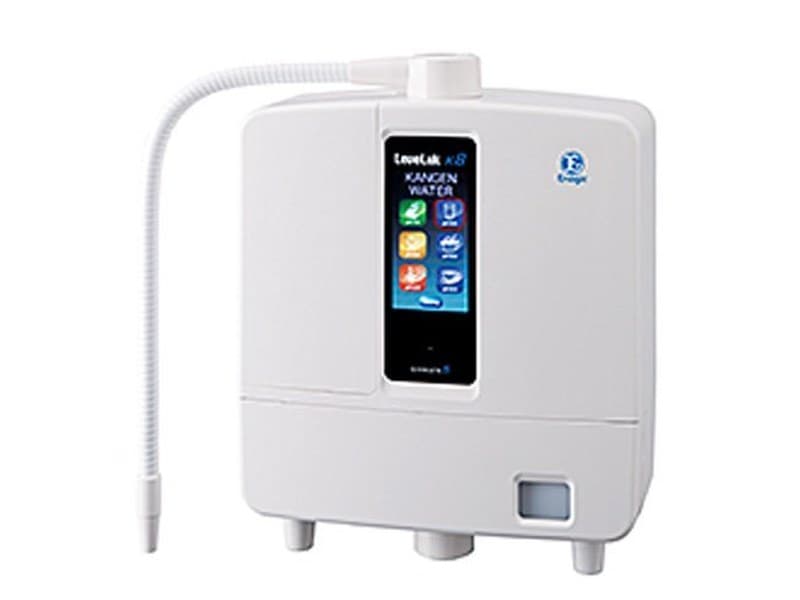
Leveluk K8 — Enagic
The eight-plate model

Leveluk K8

€5,610.00
VAT (21%) and shipping to Spain included
  • 8 platinum-coated titanium plates
  • 5-year factory warranty
  • Multi-voltage power supply
  • Produces all 5 water types
Best for: Households with high consumption
Leveluk SD501DX — Enagic
Advanced home model

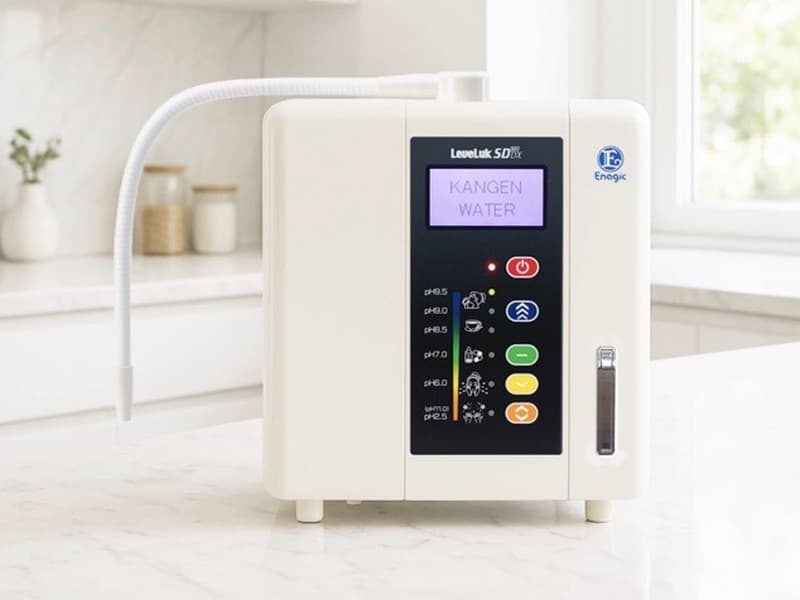
Leveluk SD501DX

€4,569.40
VAT (21%) and shipping to Spain included
  • 7 platinum-coated titanium plates
  • 5-year factory warranty
  • Large LCD panel with voice prompts
  • Universal power input
Best for: The best all-rounder
Leveluk Jr IV — Enagic
The energy saver

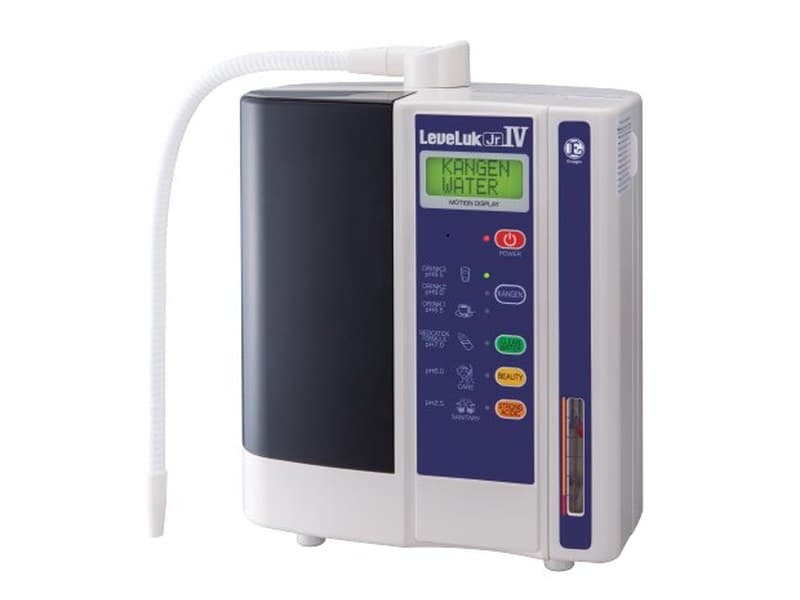
Leveluk Jr IV

€3,543.00
VAT (21%) and shipping to Spain included
  • 4 solid electrode plates
  • 3-year factory warranty
  • 120 W: half the consumption
  • Built-in enhancer tank
Best for: One person or a couple

Other products

Alongside the ionisers, Enagic offers other home products and the machine's replacement parts.
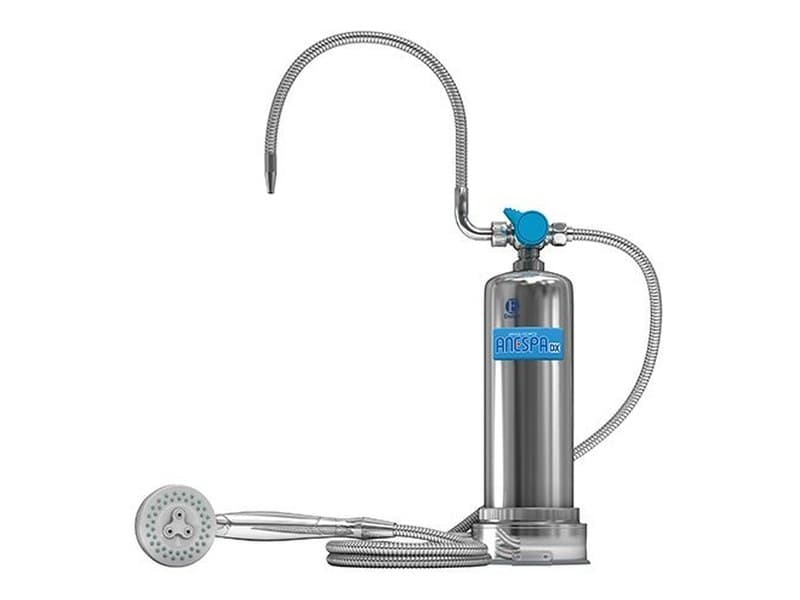
Anespa DX — Enagic
Mineral ion water spa

Anespa DX

€3,422.00
VAT (21%) and shipping to Spain included
  • Filters chlorine from shower water
  • Dual filtration: active charcoal and ceramic
  • Massage shower head with adjustable settings
  • 3-year factory warranty
Best for: Shower and bath, not for drinking
Filtros de recambio — Enagic
Machine maintenance

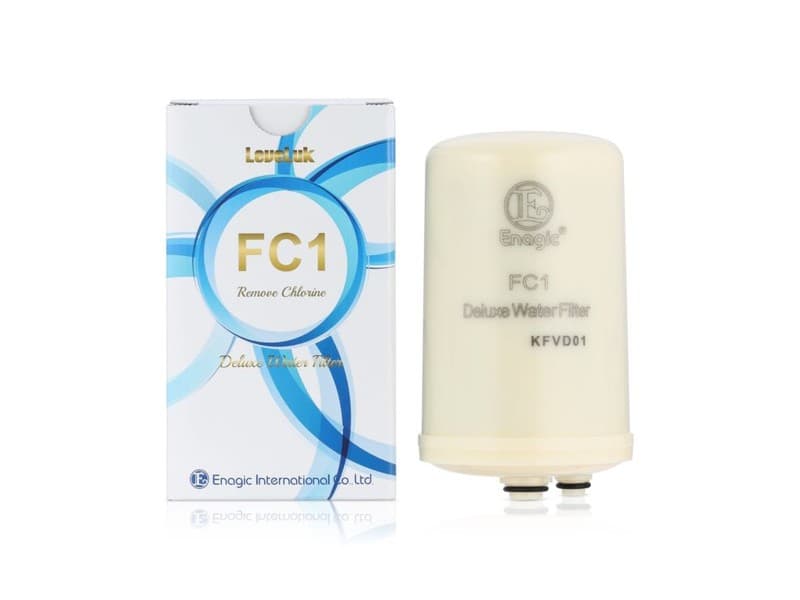
Filtros de recambio

Ask for price
  • Recommended replacement every six months
  • FC1 filter for the ionisers
  • Two cartridges for the Anespa DX
  • Genuine Enagic filters only
Best for: All models and the Anespa DX

Quick comparison

ModelPlatesWarrantyNegative ORPLanguagesBest forPrice
Leveluk K885 years-722 mV10Households with high consumption€5,610.00
Leveluk SD501DX75 years-631 mV8The best all-rounder€4,569.40
Leveluk Jr IV43 years-450 mV1One person or a couple€3,543.00

Prices in euros for orders delivered to mainland Spain, with 21% Spanish VAT and shipping already included. They are final prices: what you pay, not a base rate. For any other destination Enagic applies the VAT and the shipping cost of that country, so the total will be different and worth checking first. Enagic sets the rates and updates them periodically: get in touch and I will confirm today's rate and the payment options available.

Do the maths

What bottled water is costing you

Set your real consumption. The numbers come from what you enter, not from an optimistic estimate.

Spent on bottled water2,002 €
Per year400 €
Plastic bottles3,640
Litres carried home5,460 L
Water used to produce it16,380 L

It takes around 3 litres of water to produce 1 litre of bottled water, according to the European Commission. Maintenance is one filter cartridge, replaced according to the litres produced.

Enagic worldwide

44 offices in 29 countries

Enagic manufactures in Japan and runs its own offices in 29 countries. In Europe it has branches in Germany, France, Italy, Romania and Portugal.
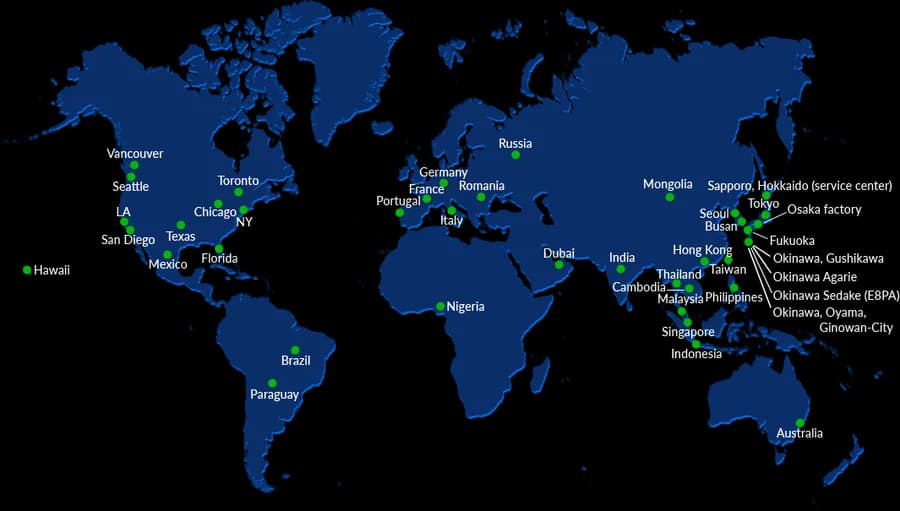

Enagic
Roberto Cortade
Enagic Independent Distributor

Roberto Cortade

I have been using the machine at home for years. If you are considering one, the most useful thing is a ten-minute chat: I can tell you which model fits your household, how it is installed and what maintenance it needs. No rush, no obligation.

Chat on WhatsApp
Let's talk

Would it work in your home?

Tell me how many of you there are and what you would use it for, and I will advise you with no obligation.

Common questions

Frequently asked questions

How is a Kangen machine installed?
It connects to the kitchen tap using a diverter fitted at the end of the spout. In most kitchens no plumbing work is needed, and I will walk you through the installation.
What maintenance does it need?
One filter cartridge, replaced according to the litres the machine has produced. The machine itself tells you when it is due. There are no other compulsory consumables.
How much does a Kangen machine cost?
Enagic sets the prices and updates them periodically. The domestic range currently runs from the entry-level model up to the eight-plate one. Get in touch and I will send you the current price list in writing.
What is the difference between the K8 and the SD501DX?
The K8 has eight titanium plates and the SD501DX has seven, so the K8 offers more electrolysis surface. Both carry a five-year factory warranty; the K8 also has a multi-voltage power supply for use in other countries.
What warranty do the machines carry?
Between three and five years of factory warranty depending on the model. I will send you the exact current conditions in writing before you decide anything.
Can it be paid in instalments?
Enagic has its own payment options and they change over time. I will tell you which ones are available at the moment you ask.
Can I take medication with Kangen Water?
No. Enagic states that medication should be taken with pH 7.0 Clean Water, the one produced without electrolysis.
Does the water change if I heat or chill it?
Yes. Heating changes both the ORP and the pH. Chilling changes the ORP, but the pH holds for up to a week depending on the quality of the source water.
How long does the water keep?
The two drinking waters are best used fresh: four or five days in the fridge at most, replacing the water in your carry bottle daily. The household waters allow more leeway, though weekly renewal is recommended. Store them in a light-proof container, filled to the top so no air remains, somewhere cool and dark.
Does the incoming mains water matter?
Yes. With municipal mains water the result is unaffected, but with well water the electrolysis efficiency drops, as it tends to contain a good deal of free carbon dioxide.
Can the machine be used in another country?
The K8 and the SD501DX have multi-voltage power supplies, so yes. The plug adapter is sold separately.
What does the negative ORP in the specifications mean?
ORP, or oxidation-reduction potential, is measured in millivolts and indicates whether water tends to oxidise or to reduce. Enagic's specification sheets list the negative ORP of each model: -450 mV on the Jr IV, -631 mV on the SD501DX and -722 mV on the K8. It is a measure of the quality of the electrolysis and it lets you compare the machines.
Can all five waters be drunk?
No. Of the five types, three are for consumption (Kangen Water, Clean Water and the intermediate levels) and two are for external household use: Strong Kangen Water at pH 11 and Strong Acidic Water at pH 2.7.